Yan Shou Gong · 延壽功 · The Art of Longevity

Yan Shou Gong

A 36-form Nei Gong system created in the early 1980s by Grandmaster Chee Kim Thong and Grandmaster Yap Cheng Hai, distilled from the Shaolin arts of Luohan Ruyi and Wu Ji Quan — now taught by Master Yap Boh Heong through a six-module program.

Start with Sets 1–6

Master Yap Boh HeongTaught by Master Yap Boh Heong6-module programLifetime access

How it is taught

See how Yan Shou Gong is actually trained

Yan Shou Gong is not learned by memorising a sequence of movements. Master Yap describes the forms as the 'textbooks' of the system: first the movements are learned precisely, then attention is turned inward to what he calls the 'strings' — the connected action of the fascia, tendons and muscles through which force is transmitted.

The training follows a clear progression. First you learn the movement, then become aware of what is happening inside the body, then learn to control it. From there the work develops toward generating and transmitting power.

Progress is also tested physically. Grounding, for example, is not treated as an idea: Master Yap demonstrates it with a simple one-finger push to the chest. Each later module returns to the sets already learned and introduces their testing methods and applications before moving on to the next six sets.

6 lessons of Sets 1–6 are free to previewFree account

  • The History of Yan Shou Gong7:50
  • The creators of Yan Shou Gong4:38
  • The benefits of training Nei Gong7:36
  • How to approach training Nei Gong3:44
  • The Roadmap45:25
  • The Roadmap - Part 213:45
The method

What makes Yan Shou Gong different

Yan Shou Gong 延壽功 — the art of longevity — condenses two Shaolin Nei Gong arts, Luohan Ruyi and Wu Ji Quan, which were taught only to the temple's senior monks, into thirty-six short forms: each takes twenty to thirty minutes to learn and two or three minutes to practise.

Jin 勁 and Yi 意

Jin is elastic power, stored and released by the muscles, tendons and fascia like a drawn bow — and released loose, which the tradition calls Song. Yi is intention: not an energy itself, but the focus that controls how the energy is generated and released. In the Shaolin model Master Yap teaches, they are learned in order — strength, then Jin, then Yi, then Qi — and no level can be skipped.
Grounding, rooting, centering

Grounding: a stance that holds when it is pushed. Rooting: the push is sent into the ground and the ground's reaction is brought back up through the body. Centering: the centre line stays still while the body moves, so a force can be yielded to and the position regained. They are the first milestones, and each depends on the one before.

Short forms, made to be practised

Thirty-six forms, each about twenty to thirty minutes to learn and two or three minutes to practise. The founders condensed the long Shaolin forms on purpose, so that people with work and families would actually train.

Tested, not assumed

A partner applies light pressure and the structure either holds or it does not. Grounding is tested with a single finger pressed against the chest. Testing turns 'I think I am rooted' into something you can feel — Master Yap calls that experience a landmark.

Applications, set by set

Each module teaches the next six sets together with the testing methods and applications for the sets taught before it — Sets 7–12 open with the tests for Sets 1–6.

Master Yap Boh Heong
Your teacher

Master Yap Boh Heong

Third-generation master of Southern Shaolin Kung Fu · Malaysia

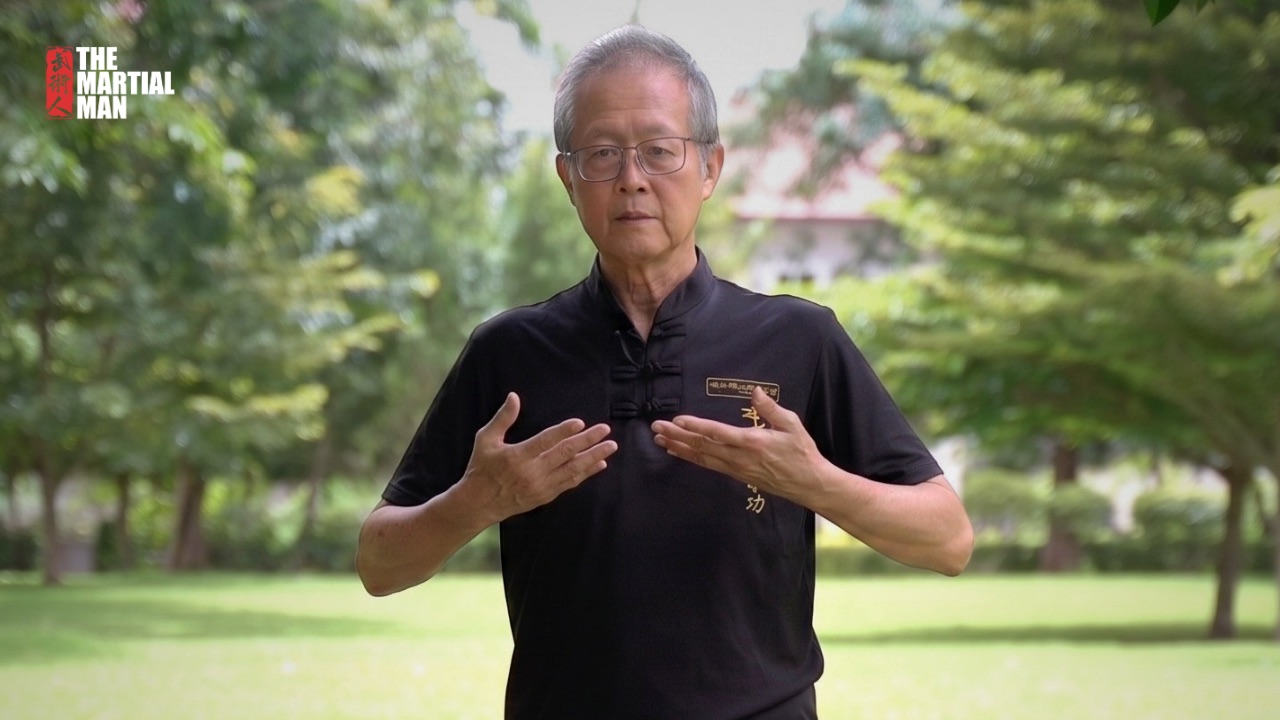
Yap Boh Heong is a 3rd-generation Kung Fu master with nearly 50 years of experience in Southern Shaolin Kung Fu and the internal arts, including Five Ancestors, Wu Mei, and Yan Shou Gong. Son of the late Grandmaster Yap Cheng Hai, he developed a teaching method that makes sophisticated concepts accessible and accelerates progress. Having taken up the mantle since the passing of Grandmaster Yap Cheng Hai and Grandmaster Chee Kim Thong, he now teaches Yan Shou Gong internationally across Europe and Asia.

  1. Grandmaster Chee Kim ThongCame to Malaysia towards the end of the Second World War.
  2. Grandmaster Yap Cheng HaiHis first disciple, taught from the early 1960s — Master Yap Boh Heong's father.
  3. Master Yap Boh HeongAssumed responsibility for the transmission of Yan Shou Gong and now teaches it internationally.

Instructor profile and all of his courses →

The program

One system, six modules

Each module teaches six sets and builds on the sets taught before it. The complete program is planned as six modules; the final two are in development.

01 · Sets 1–602 · Sets 7–1203 · Sets 13–1804 · Sets 19–2405 · Sets 25–30 · in development06 · Sets 31–36 · in development
Yan Shou Gong: Shaolin Nei Gong – Sets 1–601
Module 1 · Sets 1–6

Yan Shou Gong: Shaolin Nei Gong – Sets 1–6

The foundation of the series: Forms 1–6 taught in full, opening with six free lessons on the history of the art, how to approach Nei Gong training, and the Roadmap. Assumes no prior experience.

90 lessons6 free previews5.0★ (108)$299 · Lifetime

Assumes no prior experience.

Yan Shou Gong: Shaolin Nei Gong – Sets 13–1803
Module 3 · Sets 13–18

Yan Shou Gong: Shaolin Nei Gong – Sets 13–18

Forms 13–18 taught in full, with the testing methods and applications for Forms 7–12 and a six-lesson block on the five stages of learning internals.

48 lessons5.0★ (10)$299 · Lifetime

Completion of Sets 1–6 and Sets 7–12 is required before enrolling.

In development
Module 5 · Sets 25–30

In development

The complete program is planned as six modules; the final two are in development.

In development
Module 6 · Sets 31–36

In development

The complete program is planned as six modules; the final two are in development.

Reference

The 36 Yan Shou Gong forms

Taught progressively across six course modules. The four published modules teach Forms 1–24; Modules 5 and 6 are in development.

The names of Forms 25–36 follow Grandmaster Yap Cheng Hai’s historical 36-set listing. They may be updated when Master Yap approves the later course modules.

Module 1 · Sets 1–6

  1. 01Everything Comes From Emptiness
  2. 02Look Left, Look Right
  3. 03Casting the Net
  4. 04Calming Heaven & Earth
  5. 05Incense Pointing to Heaven
  6. 06Sun & Moon Swinging

Module 2 · Sets 7–12

  1. 07Falling Golden Star
  2. 08Seated with Hands Protecting the Heart
  3. 09Deities Stretching Their Legs
  4. 10Shifting of the Legs
  5. 11Lazy Mule Stretching Its Back
  6. 12Twisting the Waist Left & Right

Module 3 · Sets 13–18

  1. 13Overturning the Oceans & the Rivers
  2. 14Subduing the Wind & the Oceans
  3. 15Hands Holding the Sun & the Moon
  4. 16Holding the Censer Revering Heaven
  5. 17Eye Exercises to Strengthen the Kidneys
  6. 18Holding the Baby & Nourishing the Mind

Module 4 · Sets 19–24

  1. 19Ferocious Tiger Pushing the Mountain
  2. 20Fairy Gently Pulling Silk
  3. 21Child Wiping the Mirror
  4. 22Relaxing the Shoulder, Twisting the Waist
  5. 23Separating the Yin & the Yang
  6. 24Up & Down the Five Elements

Module 5 · Sets 25–30In development

  1. 25Moving the Hexagram (Ba Gua)
  2. 26Separating the Sky & the Earth
  3. 27Turning the Hexagram (Ba Gua)
  4. 28Both Palms Facing the Heart
  5. 29Phoenix Gazing at the Sun
  6. 30Monkey Climbing Up the Tree

Module 6 · Sets 31–36In development

  1. 31Shifting the Inner Qi
  2. 32Inhaling & Exhaling of Qi
  3. 33Phoenix Dancing
  4. 34Bouncing, Leading in, Pushing & Pressing
  5. 35Pulling, Throwing, Elbowing & Leaning
  6. 36Floating, Sinking, Absorbing & Expelling
Student reviews
4.97average across 146 verified student reviews of the Yan Shou Gong courses
★★★★★

Calculated comprehensive instructions

“Dive in! The instructors approach is methodical, shows different perspectives, and explains everything at pace where the student can absorb every detail effectively. I’m thankful he is giving others the opportunity to learn this important art in a modern and affordable way!”
Nassor James · Sets 1–6 · Apr 2026
★★★★★

Another Great Course in the YSG Series

“Seeing some examples of testing for the first six forms was brilliant, and the course has a thorough breakdown of forms seven to twelve.”
Harry Bryan · Sets 7–12 · Aug 2025
★★★★★

Centuries old knowledge with real results

“I've been a practitioner of the Chinese martial arts for over 40 years. I know real knowledge when I see it. The results speak for themselves. Master Yap is the real deal. I am honored to be part of the family.”
Gary Renza · Sets 13–18 · Sept 2024
Start here

Begin with Sets 1–6

Sets 1–6 is for the martial artist seeking an authentic internal art — and equally for anyone whose life has been busy and overstretched, and who now wants to attend to their own well-being.

Yan Shou Gong: Shaolin Nei Gong – Sets 1–6 — course artwork
Module 1 · Sets 1–6

Yan Shou Gong: Shaolin Nei Gong – Sets 1–6

  • Sets 1–6 is the foundational course of the series and assumes no prior experience.
  • The foundation on which every later module is built — 90 lessons.
  • 6 lessons free to preview with a free account, before you buy.
  • Each course is a one-time payment with immediate, lifetime access to all of its lessons.
  • Every lesson is subtitled in five languages: English, French, German, Italian, and Spanish.

$299 · Lifetime

Start with Sets 1–6

Exclusive online course seriesMaster Yap Boh Heong’s complete Yan Shou Gong online course series is available exclusively through The Martial Man.

Lineage

A Southern Shaolin transmission

In the lineage's own account, Grandmaster Chee Kim Thong came to Malaysia towards the end of the Second World War and, in the early 1960s, taught his first disciple, Grandmaster Yap Cheng Hai — Master Yap Boh Heong's father.

Together, in the early 1980s, the two grandmasters created Yan Shou Gong, distilling it from Luohan Ruyi and Wu Ji Quan — the two Shaolin Nei Gong arts Grandmaster Chee had learned last, from a monk of the Shaolin Temple.

The history of Yan Shou Gong and the story of its creators are taught in the opening lessons of Sets 1–6, free to preview before enrolling.

Community

Yan Shou Gong — Official

Welcome to the Yan Shou Gong circle. Please use this group to ask questions, discuss the video lessons and share your training Yan Shou Gong experiences.

Visit the Circle

Yan Shou Gong is a traditional practice for health and martial cultivation. It is not medical treatment and is not a substitute for professional medical advice, diagnosis, or care. If you have an existing health condition or are recovering from injury, consult a qualified practitioner before beginning.

Yan Shou Gong · 延壽功 · The Art of Longevity

Begin Yan Shou Gong

Yan Shou Gong is a Nei Gong system of the Southern Shaolin tradition, taught as a structured series of course modules.